

Himalayan temple reborn as modern art center in China’s Xizang (Tibet)
- Written by Telegraph Magazine
BEIJING, CHINA - Media OutReach Newswire - 26 October 2025 - The historic Jebum-gang Lha-khang Temple in Lhasa, southwest China's Xizang Autonomous Region (Tibet), has been transformed from a centuries-old place of worship and a former granary into a vibrant modern art center.
This unique project has revitalized a key cultural site for a new generation. 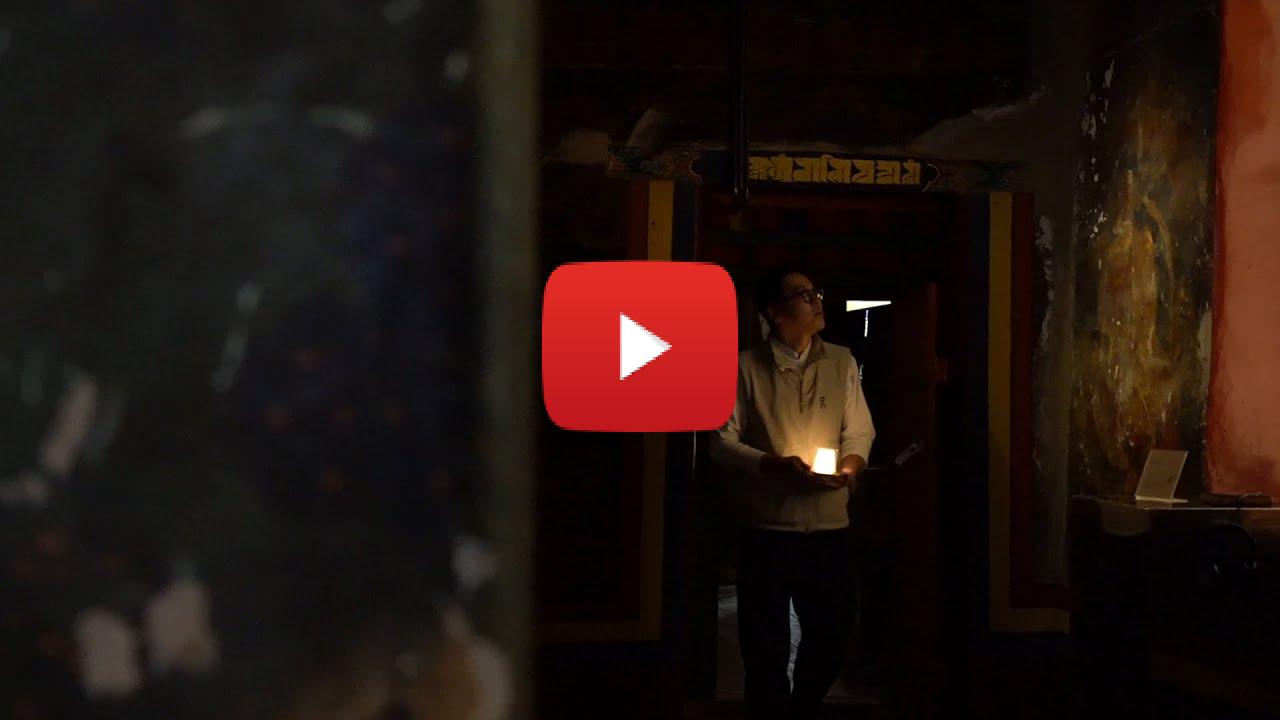
The temple has a history of approximately 200 years and has murals from the Qing Dynasty (1644-1911), according to Chinese architect Xia Yujun.
Nestled in a bustling business street and residential area at an altitude of 3,650 meters, the temple has been a center of energy for the ancient city of Lhasa and an important carrier of local Tibetan culture. Its circular construction, ancient Tibetan pillars and verandas, and centuries-old murals were among the highlights that hit him between the eyes.
First built in the late 19th century, the Jebum-gang Lha-khang Temple is the only mandalic building, featuring a symbolic Buddhist symmetrical structure. After decades of use as a granary, it has been transformed into a popular place among visitors in pursuit of modern art, thanks to five years of efforts by Xia and his team.
The building has been given a new lease on life. Xia's team carefully repaired faded murals and fire-damaged carvings, ensuring the original architecture and layout were preserved.
The true innovation, however, lies in its new function. After the basics of the temple were restored, the space was reused as a modern art space, without altering the original structure or the spatial flow. This sensitive transformation has created a dynamic dialogue between the old and the new.
The goal was to bring it back to life, Xia says.
The rebirth of the Jebum-gang Lha-khang Temple as a modern art center required a sensitive yet thorough technological upgrade, seamlessly weaving new infrastructure into the historic fabric of the building.
Facing a near-total reconstruction of its core systems, the project began by fortifying the structure against the elements. A advanced, three-layer waterproofing system was applied to the roof, to ensure that the murals inside would not be affected for the next decade, Xia explained.
The most ingenious integration involved the floor. Old elm-wood flooring was installed using a joist structure, under which the necessary pipeline and electrical systems were embedded, paving the way for sound, lighting and electrical equipment essential to future exhibitions, thus preserving the temple's ancient aesthetic.
The lighting system was completely re-engineered for its new role.
The incandescent lights were replaced with special lamps for museum-grade illumination, reducing the harmful rays that could damage the murals, while simultaneously crafting an ambient atmosphere that allows viewers to experience the tranquility of this sacred building.
Through these careful interventions, the temple now possesses the robust, unseen framework of a contemporary art space, all while enhancing and protecting its historical soul.
The transformation of the Jebum-gang Lha-khang Temple into a modern art center was guided by a profound understanding of its multi-sensory nature. Xia describes Tibetan ancient architecture as a multi-sensory "5D or 6D" experience, encompassing scent, sound, light, and history.
This philosophy directly shaped the restoration. The goal was not just to repair a building, but to preserve this immersive sensory atmosphere while equipping it for a new purpose. The temple's rebirth is thus a sensitive fusion where modern functionality serves to amplify, rather than diminish, the timeless multi-sensory experience of the ancient structure.
This approach of repurposing historic buildings as art centers or museums aims to raise awareness among young generation about conservation and inspire them to engage with the preservation of architectural heritage in Xizang.
(The Chinese term "Xizang" refers to southwest China's Tibet Autonomous Region.)
The issuer is solely responsible for the content of this announcement.


