


Self-Managed Home Care Packages: What Are the Benefits and Responsibilities?
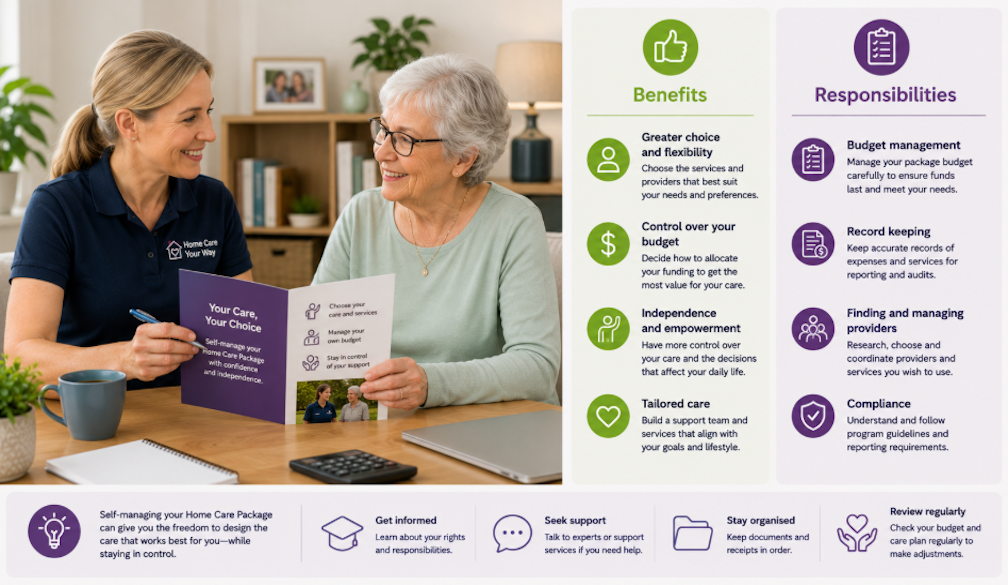
A self-managed home care package gives older Australians greater involvement in deciding how their funded support is arranged and delivered. Since November 2025, Australia’s Support at Home programme has replaced the former Home Care Packages Programme, but the principle of participant choice remains important. Depending on individual circumstances and the provider’s model, self-management can involve choosing workers, organising services and monitoring available funding.
Greater Choice and Flexibility
One of the main advantages is control. Rather than relying entirely on a provider to arrange every service, individuals can have more say over who supports them, when services are delivered and which priorities matter most.
This flexibility can make care feel more personal. Someone may prefer a familiar cleaner, a particular support worker or services scheduled around family commitments. Self-management can also encourage people to remain actively involved in decisions affecting their independence and quality of life.
Making Funding Work Effectively
Self-management requires a clear understanding of the available budget. Tracking expenditure can help prevent unexpected shortfalls and make it easier to prioritise essential services.
It may also provide opportunities to compare providers, discuss rates and select services that offer appropriate value. However, funding can only be used for eligible supports under the relevant aged-care rules and individual support plan. Keeping invoices, agreements and spending records organised is therefore important.
Responsibilities to Consider
Greater control comes with greater responsibility. A person self-managing their care may need to communicate with service providers, coordinate schedules, monitor service quality and raise concerns when arrangements are not working.
They should also understand their care plan, funding conditions and responsibilities around safe service delivery. Where circumstances change, reviewing needs and adjusting arrangements is essential. People who find administration difficult may benefit from involving a trusted family member, carer or care-management professional.
Is Self-Management Right for Everyone?
Self-management can suit people who value independence, feel comfortable making decisions and have enough time or support to coordinate services. It may be less suitable for someone whose care needs are highly complex or who would find administration stressful.
Good preparation can make the arrangement easier. Before choosing self-management, consider the person’s mobility, health-related support needs, preferred routines, available technology, family involvement and confidence with record-keeping. It is also sensible to discuss the arrangement with the chosen provider and clarify exactly what support, administration and guidance will remain available beforehand.
The right approach can also change over time. A person may begin with greater independence and later choose more provider assistance as their circumstances evolve.
The Role of PlanCare AU
PlanCare AU provides a self-management option within its Support at Home services, while offering guidance through a dedicated Co-Care Partner. Its model allows clients to organise their preferred support providers while receiving assistance with areas such as provider verification, payments and tracking funding. This type of support illustrates how self-management does not necessarily mean managing every administrative task alone.
Conclusion
Self-management can provide meaningful choice, flexibility and a stronger sense of ownership over care. However, it requires organisation, informed decision-making and attention to funding requirements. For eligible older Australians, a self-managed home care package can be valuable when the individual has the confidence and support needed to manage responsibilities effectively.