

The Quiet Luxury Approach to Interior Design
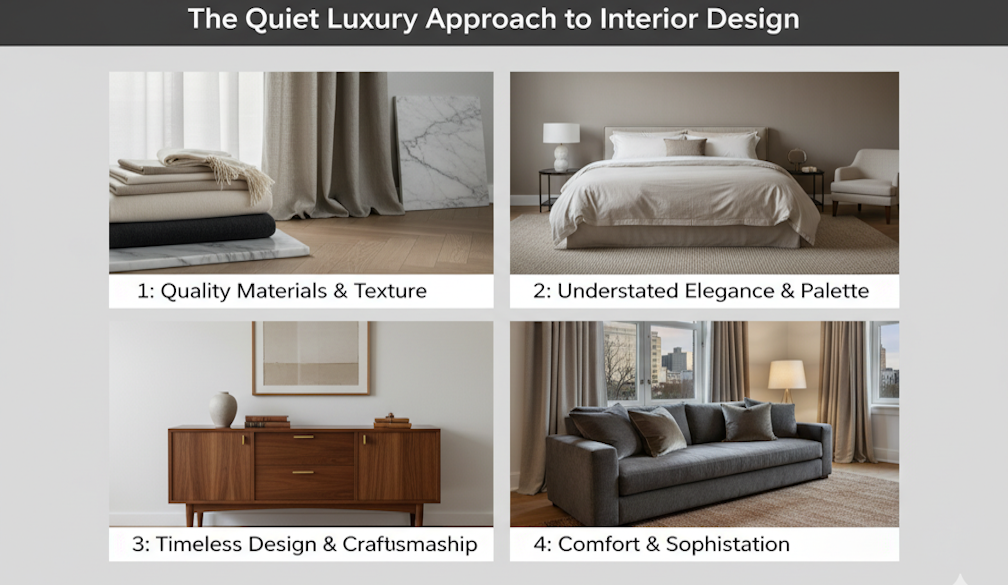
There is a reason quiet luxury has become such a powerful influence in interior design. In a world that often feels fast, loud, and visually crowded, many people are craving homes that feel calm, refined, and deeply considered. Quiet luxury is not about filling a room with expensive-looking pieces or following every new trend. It is about restraint, balance, quality, and the kind of confidence that does not need to announce itself.
At its core, quiet luxury in interiors is about creating spaces that feel polished without becoming flashy. The effect is subtle, but unmistakable. A home designed this way feels warm, elevated, and timeless. It invites you in slowly rather than trying to impress you all at once. Pieces such as elegant round coffee tables work beautifully in this kind of setting because they contribute shape, softness, and sophistication without overwhelming the room.
What makes quiet luxury so appealing is that it is not tied to one strict style. It can sit comfortably within contemporary, coastal, classic, minimalist, or even slightly rustic interiors. The common thread is intention. Every choice feels deliberate. Nothing is there simply to fill a gap. Nothing is trying too hard. Instead, the room comes together through thoughtful layering, quality materials, and a strong sense of ease.
Quiet Luxury Begins With Restraint
One of the biggest misconceptions about luxurious interiors is that more automatically means better. More texture, more furniture, more decorative pieces, more statement moments. Quiet luxury moves in the opposite direction. It relies on editing. The room is not sparse or empty, but it is selective.
That means looking at a space and asking whether each element is contributing something meaningful. Does it add comfort? Does it improve the flow? Does it bring beauty through form, texture, or craftsmanship? Or is it simply there because the room felt unfinished without it?
A quiet luxury home tends to avoid visual noise. Surfaces are not overloaded. Shelves are styled with a light hand. Furniture is chosen for both comfort and proportion. There is enough in the room to make it feel complete, but not so much that the eye does not know where to rest.
This sense of restraint is what gives quiet luxury its calm authority. It creates an atmosphere that feels settled, mature, and quietly confident.
Quality Over Excess
Quiet luxury is often associated with quality, and for good reason. When a room is not relying on bright trends or dramatic styling tricks, the materials and finishes have to do more of the work. This is where craftsmanship becomes important.
Natural timber, linen, wool, stone, leather, brushed metal, textured ceramics, and beautifully made upholstery all help build that sense of understated refinement. These materials do not need to be showy. In fact, part of their appeal lies in how natural and unfussy they feel. They age well, soften over time, and bring richness to a space in a way that synthetic or overly polished materials often cannot.
This does not mean every item in the room needs to be high-end. Quiet luxury is not about price tags. It is about choosing fewer things, and choosing them well. A single armchair with beautiful lines and durable fabric can have more impact than a room full of trend-driven furniture that lacks presence. A well-made dining table, a solid occasional chair, or a carefully chosen rug can anchor a room far more effectively than endless accessories ever could.
The goal is to create a feeling of permanence. A room should feel like it has been built thoughtfully, not rushed together.
A Soft and Sophisticated Colour Palette
Colour plays an enormous role in the quiet luxury look. The palette is typically soft, layered, and grounded, rather than bold for the sake of drama. Think warm whites, chalky beiges, gentle taupes, muted greys, olive undertones, soft charcoals, dusty stone, and earthy browns. These colours create a calm base that allows materials, shapes, and texture to stand out.
That does not mean the space has to feel plain. A monochromatic room can still feel rich when it includes tonal variation. This is where quiet luxury becomes especially effective. Instead of relying on contrast through loud colours, it builds interest through subtle shifts. A creamy sofa against a sandy wall, a walnut side table beside a linen chair, or a boucle ottoman layered over a soft wool rug can create a room that feels visually deep without becoming busy.
Deeper tones also have a place in quiet luxury interiors, but they are usually used in a measured way. A moody brown timber finish, a soft black lamp base, or a charcoal accent chair can add depth and polish when balanced against lighter elements.
The overall feeling should be cohesive and settled, not overly coordinated or flat.
Texture Does the Heavy Lifting
In a quiet luxury home, texture is often more important than pattern. Since the design is usually pared back and the colour palette is restrained, texture is what keeps the room from feeling cold or one-dimensional.
This can come through woven fabrics, tactile upholstery, matte finishes, natural stone, ribbed glass, plaster-like walls, softly washed timber, and layered textiles. The beauty of texture is that it adds richness without demanding attention. It gives a room depth you can feel, even when you cannot immediately identify why the space feels so inviting.
This is one of the reasons quiet luxury interiors often photograph beautifully but feel even better in person. The subtle details matter. The grain of the wood, the drape of the curtain, the softness of the rug underfoot, and the finish of a ceramic vase all contribute to the atmosphere.
Rather than relying on visual clutter, quiet luxury leans into sensory quality. The room feels better because the materials are better, the layers are softer, and the choices have more integrity.
Furniture With Presence, Not Ego
Furniture in a quiet luxury interior tends to be elegant but grounded. It is not overly ornate, but it is not bland either. The shapes are often soft, sculptural, and balanced. Curves, generous proportions, refined edges, and timeless silhouettes all play a role.
The key is that the furniture has presence without ego. It holds the room confidently, but it does not dominate it in a loud or theatrical way. A beautifully proportioned sofa, a curved armchair, a substantial timber console, or a low-profile coffee table can all contribute to that sense of understated luxury.
Scale is especially important here. Quiet luxury interiors rarely feel cramped or overfilled. Furniture is given enough breathing room to be appreciated. The layout supports conversation, comfort, and easy movement. This makes the home feel more expensive, not because it is larger, but because it is better resolved.
Rather than choosing furniture that screams for attention, quiet luxury favours pieces that reward attention over time. The more you live with them, the more their quality, shape, and usefulness become apparent.
Styling That Feels Collected, Not Performed
Styling in a quiet luxury home is careful, but never fussy. The room should not feel like it has been styled within an inch of its life. Instead, it should feel naturally complete.
This usually means fewer decorative objects, but better ones. A large ceramic bowl with organic form. A stack of substantial books. A sculptural lamp. A single branch in a vessel with real presence. Art that feels thoughtful rather than generic. These choices create impact because they are not competing with dozens of other items.
Negative space also matters. Not every surface needs something on it. In fact, part of what makes a quiet luxury interior feel elevated is the confidence to leave certain areas alone. Empty space allows the eye to appreciate the pieces that are present.
The goal is not to remove personality. It is to express personality with more intention. A quiet luxury home can still feel deeply personal, but the personality comes through taste, restraint, and curation rather than sheer quantity.
Lighting as Atmosphere, Not Afterthought
Lighting can completely change how a room feels, and in quiet luxury interiors it is rarely treated as an afterthought. The right lighting softens the space, highlights materials, and creates intimacy.
Instead of relying solely on harsh overhead lights, this approach favours layered lighting. Table lamps, wall lights, floor lamps, and warm ambient lighting all help build mood. Light should feel gentle and flattering, not stark and clinical.
Fixtures themselves also matter. Quiet luxury lighting often features timeless forms, natural materials, and refined finishes. Think stone, linen, glass, aged brass, or matte black used with restraint. The pieces do not need to be extravagant. They just need to feel considered and well chosen.
A room can have beautiful furniture and a strong palette, but without good lighting it will never fully deliver that soft, elevated atmosphere. Lighting is what helps a home feel lived in, settled, and quietly indulgent.
The Importance of Flow and Ease
One of the less obvious features of quiet luxury is how effortless the home feels to move through. The space is not just beautiful to look at. It is comfortable to live in.
Layouts are practical and intuitive. Furniture placement supports how people actually use the room. There is a sense of openness, but also intimacy. Nothing feels awkwardly placed or overly styled for effect. This ease is part of what makes quiet luxury so successful. It values function as much as appearance.
A living room, for example, should encourage conversation and relaxation without feeling rigid. A bedroom should feel restful and cocooning rather than decorative for the sake of it. A dining area should feel inviting, balanced, and easy to gather around.
When the layout works, the room instantly feels more refined. There is an invisible luxury in spaces that simply flow well.
Why Quiet Luxury Has Staying Power
Trends come and go, but quiet luxury has real longevity because it is built on principles rather than gimmicks. It values timelessness over novelty, quality over quantity, and comfort over showmanship. These are ideas that do not date easily.
That makes it especially appealing for people who want their home to feel relevant for years, not just for a season. A quiet luxury interior does not need to be constantly updated because it is not chasing the latest look. It is anchored in materials, proportions, and design decisions that hold up over time.
There is also something emotionally appealing about this approach. A quiet luxury home offers relief from excess. It feels calmer, slower, and more grounded. It supports everyday life while still feeling beautiful. In that sense, it is not just a design style. It is a mindset.
Bringing Quiet Luxury Into Your Own Home
Adopting a quiet luxury approach does not require starting from scratch. In many cases, it is more about refining than replacing. Begin by editing what is already in the room. Remove anything that feels purely decorative, overly trendy, or visually noisy. Focus on what genuinely adds comfort, beauty, or function.
From there, look at your materials and palette. Could the room feel softer, warmer, or more cohesive? Could you introduce more natural finishes, better textiles, or more considered lighting? Could one excellent piece replace several forgettable ones?
It also helps to think less about decorating and more about composing. Quiet luxury is rarely about individual items in isolation. It is about how everything works together. Tone, texture, spacing, and shape all matter.
Most importantly, resist the urge to overdo it. Quiet luxury loses its strength the moment it starts trying too hard. The real beauty of the look lies in its control. It trusts quality, simplicity, and balance to speak for themselves.
The quiet luxury approach to interior design proves that sophistication does not have to be loud
Some of the most beautiful homes are not the ones filled with statement pieces and trend-driven styling. They are the ones that feel composed, tactile, calm, and enduring.
By focusing on quality materials, thoughtful restraint, soft layering, and timeless furniture, you can create a home that feels elevated without ever feeling showy. That is the real power of quiet luxury. It does not demand attention. It earns it slowly, through atmosphere, detail, and a deep sense of ease.


