

A Practical Guide to School First Aid Supplies That Actually Get Used
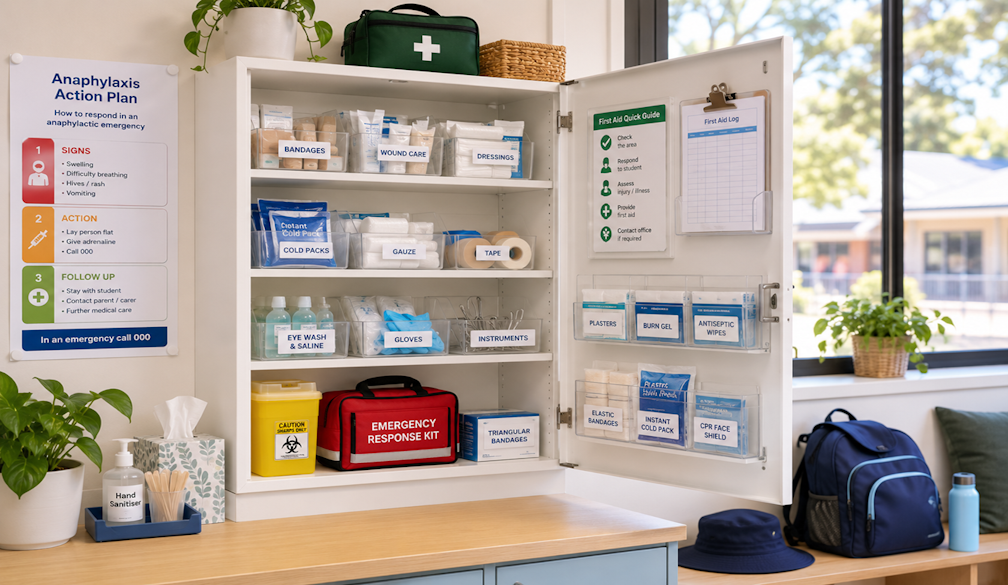
Ask any school first aid coordinator what keeps them up at night and you'll often hear the same thing: it's not the big emergencies they worry about, it's whether the sick bay is properly stocked for the dozens of small incidents that happen every single week. Grazed knees on the oval, a bee sting at lunchtime, a student with an anaphylaxis plan who needs immediate access to their medication school first aid supplies need to cover an enormous range of scenarios, often with a non-medical staff member as the first responder.
Getting this right matters more than it might seem from the outside. Schools carry a duty of care to every student and staff member on site, and that duty doesn't pause because the person nearest the incident is a classroom teacher rather than a nurse. This article walks through what a well-considered school first aid supply strategy actually looks like, from everyday sick bay essentials through to the compliance obligations that sit behind them.
Why Schools Need a Different Approach to First Aid
Workplaces generally deal with a relatively predictable population adults, briefed on hazards, working in defined areas. Schools are a different environment entirely. You've got children of vastly different ages and physical maturity, unpredictable playground behaviour, sports and physical education activities, food-related allergies, and staff who are often generalists rather than dedicated first aid officers.
This means first aid supplies for schools need to be genuinely broad rather than specialised. A primary school sick bay might handle everything from a nosebleed to a suspected fracture on the same day, while a secondary school with a science lab and workshop classes introduces additional hazards like chemical splashes or minor burns. The result is that school kits tend to be less about deep specialisation in one injury type and more about consistent, reliable coverage across a wide spectrum of low-to-moderate severity incidents, with clear escalation pathways for anything serious.
Core Sick Bay and Classroom Essentials
A functional school first aid setup typically operates across two tiers: a central sick bay stock and smaller, portable kits distributed to high-risk areas like the sports oval, the canteen, and science labs. Common contents include:
- Adhesive dressings and wound closure strips in a range of sizes
- Antiseptic wipes and saline for wound cleaning
- Instant cold packs for sprains, bumps, and insect stings
- Triangular bandages for slings and minor immobilisation
- Disposable gloves and infection control supplies
- Thermometers for monitoring illness
- Burns dressings for minor kitchen or lab incidents
- EpiPen storage and clear anaphylaxis action plans for at-risk students
Sports-specific kits often need additional items like strapping tape, ice packs, and splints for the sprains and minor fractures that come with physical activity. It's worth having these portable kits checked and restocked separately from the main sick bay, since they see heavier use and are easy to overlook during a routine audit.
Compliance and Duty of Care
Australian schools operate under a mix of state education department policy and general Work Health and Safety obligations, both of which place first aid provisioning squarely within a school's duty of care. This typically requires documented first aid procedures, a minimum number of staff with current first aid certification, and clearly accessible supplies that are checked regularly rather than assumed to be adequate.
Anaphylaxis management has become an increasingly prominent compliance area in recent years, with many jurisdictions requiring schools to maintain general-use adrenaline autoinjectors in addition to any student-specific devices, along with staff training on recognising and responding to a reaction. This is a good example of how school first aid strategy has to evolve alongside changing health trends and regulatory expectations, rather than being set once and left unreviewed.
Insurance and liability considerations reinforce the same point. In the event of a serious incident, a school's ability to demonstrate that it had appropriate, well-maintained first aid supplies and trained staff on hand can be a material factor in how any subsequent claim or investigation plays out.
Budget Realities and Procurement
Most school administrators are managing first aid supplies against a genuinely tight budget, often competing with classroom resources, maintenance, and other operational costs for the same limited funds. This is where procurement approach matters as much as the product list itself.
Rather than reactive purchasing scrambling to restock after supplies run low, a planned annual procurement cycle tends to work better for both budget management and continuity of care. Reviewing consumption patterns from the previous year helps predict what will actually be needed, rather than over-ordering items that rarely get used while running short on the essentials that see constant turnover.
Bulk and wholesale purchasing arrangements can make a meaningful difference here, particularly for schools that are part of a larger network or cluster and can coordinate procurement across multiple sites. Consolidating orders from a single, reliable source of first aid supplies for schools also simplifies administration: one supplier relationship, one delivery schedule, and consistent product quality across every classroom and sick bay kit, rather than a patchwork of different brands and specifications accumulated over time.
Training Non-Medical Staff
Because the person first on scene at a school incident is rarely a trained medical professional, staff training becomes one of the most important elements of the whole system. Teachers, teacher's aides, and administrative staff generally hold a basic first aid certificate, refreshed on a regular cycle, alongside specific training in areas like anaphylaxis response and asthma management given how common these conditions are among school-aged children.
Clear, simple protocols matter enormously here. A staff member responding to an incident under pressure needs to know exactly where supplies are kept, what the escalation process looks like for anything beyond minor first aid, and who to contact, whether that's calling emergency services, notifying the school nurse if one is on site, or contacting parents. Laminated quick-reference guides near sick bay stock and clearly labelled kits reduce the cognitive load on staff during a stressful moment.
Seasonal and Age-Specific Considerations
School first aid needs shift noticeably across the year. Term one and the return from summer holidays often bring a spike in insect stings and sun-related complaints. Winter terms see more respiratory illness and the associated first aid needs around managing asthma flare-ups. Sports carnivals and swimming programs introduce their own temporary spikes in demand for particular supplies.
Age also matters more than many procurement plans account for. Primary schools deal disproportionately with playground injuries and minor illness, while secondary schools introduce workshop and laboratory risks alongside a broader range of sports injuries from more intense physical education programs. A single generic kit specification applied across an entire school network, from kindergarten to Year 12, often ends up mismatched to at least some of those environments.
A Simple Framework for Reviewing Supplies
Schools that manage this well tend to follow a similar pattern: an annual full-stock audit against a documented checklist, monthly spot-checks of high-use kits like sports and canteen supplies, immediate restocking after any significant incident that draws down key items, and a clear record of expiry dates so nothing is relied upon past its use-by date. Building this into the school calendar tying the major audit to the start of the school year, for example helps ensure it doesn't get lost among competing priorities.
Communicating With Parents and Carers
First aid at school doesn't end with the immediate response how a school communicates with families afterward matters just as much for trust and duty of care. A clear incident reporting process, where parents are notified promptly and given accurate information about what happened and what treatment was given, reduces confusion and helps families make informed decisions about any follow-up care needed.
This becomes particularly important for incidents involving head injuries, allergic reactions, or anything that might warrant medical review outside of school hours. Many schools now use simple digital incident logs that generate an automatic notification to parents, alongside the traditional paper-based incident report kept on file. Having this system in place before it's needed rather than improvising in the moment takes pressure off staff during an already stressful situation and gives families confidence that the school takes these events seriously.
It's also worth building a feedback loop from these incident reports back into first aid supply planning. If a particular type of injury keeps recurring in the incident log repeated playground falls in a specific area, for example that's a signal worth acting on both from a supply perspective and a broader safety perspective, potentially prompting a look at playground surfacing or supervision arrangements rather than just restocking bandages indefinitely.
Coordinating Across Multi-Campus Schools and School Networks
Larger independent schools with multiple campuses, or clusters of schools operating under a shared administrative umbrella, face an additional layer of complexity in keeping first aid provisioning consistent. It's not uncommon for a junior campus and a senior campus within the same school to end up with quite different first aid standards simply because they've historically ordered supplies independently, through different staff members, at different times.
Standardising kit specifications across every site while still allowing for age-appropriate and activity-specific variation makes audits simpler and ensures that a staff member moving between campuses, or a relief teacher covering multiple sites, encounters a familiar, consistently organised system rather than having to learn a new layout each time. Centralising procurement for a school network also tends to improve cost efficiency and consistency of product quality, since a single relationship with a wholesale supplier can service every campus rather than each site sourcing supplies independently through whatever happens to be convenient locally.
Final Thoughts
Good school first aid provisioning isn't about stocking every conceivable item; it's about matching genuinely broad, everyday coverage to the realistic range of incidents a school will see, backed by trained staff and clear procedures. Getting the basics consistently right accessible supplies, regular audits, and simple protocols that non-medical staff can follow under pressure does more for student and staff safety than any single piece of specialised equipment ever could.


